It takes just one missed alert to turn a manageable incident into a crisis. A lockdown warning plays over the PA system, but in the DT workshop next door, the machinery is too loud. A weather alert is sent by email, but the PE staff are already outside.
In a modern school, a single channel is never enough.
It’s why more schools are moving away from standalone PA systems and isolated email alerts, and towards communication infrastructure that works across multiple channels at once. The shift isn’t driven by technology for its own sake, it’s driven by the reality of what schools are now expected to manage, and the consequences of getting communication wrong.
The limits of a single channel
Schools have always communicated – timetables, bell schedules, announcements, emergency alerts. For a long time, a PA system and an email inbox were enough to cover most of it.
But school environments have changed. Sites are bigger. School days are busier. And the range of situations that require a fast, reliable response has grown significantly.
A single channel works until it doesn’t, and the moment it fails tends to be the moment it matters most.
Reaching everyone, wherever they are
The challenge isn’t just about volume, it’s about variety. Staff are in the classrooms, kitchens, workshops, and playing fields. Some are in high-noise environments where audio gets lost. Others are mid-lesson with no chance to check their phone or inbox.
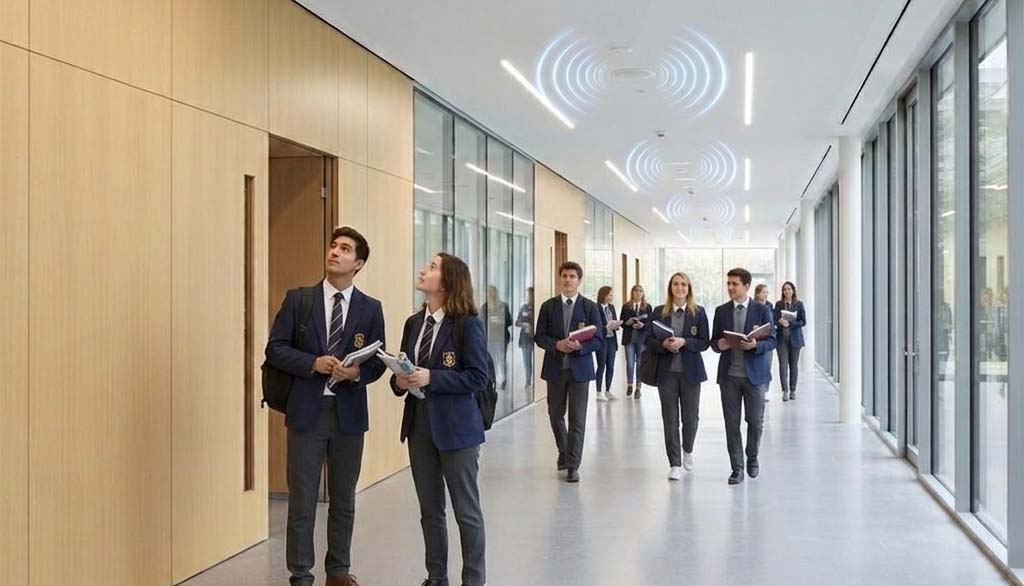
Multi-channel communication means a message doesn’t rely on one route to get through. Audio, screens, and mobile alerts go out at the same time, through different channels, so the chances of anyone missing critical information are significantly reduced.
It also means communication can be tailored to the situation. A routine announcement doesn’t need to interrupt every corner of the site. An urgent alert does. The ability to choose how and where a message lands is what makes a system genuinely useful rather than just loud.
An everyday tool, not just an emergency one
The schools getting the most value from multi-channel systems aren’t just using them for drills and incidents. They’re using them every day, automating bell schedules, managing announcements, keeping screens updated without manual effort.
That daily use matters. When staff are familiar with how communication works in normal circumstances, they’re far better placed to respond when something unexpected happens. A system that only appears in a crisis is one that nobody knows well enough to use confidently.
It’s why the shift is happening, not as a technology upgrade, but as a practical response to how schools actually operate day to day.
Martyn’s Law places a legal duty on public premises to have a clear, demonstrable communication plan in place. For schools, that means thinking carefully about whether their current setup is actually fit for purpose, not just in theory, but in practice.
Multi-channel communication is a strong foundation for meeting that standard. But having the right channels is only part of the picture. How those channels are managed, and by whom, matters just as much. Audiebant gives schools a single system to handle all of it – automating the everyday, and ensuring the critical moments are never left to chance.