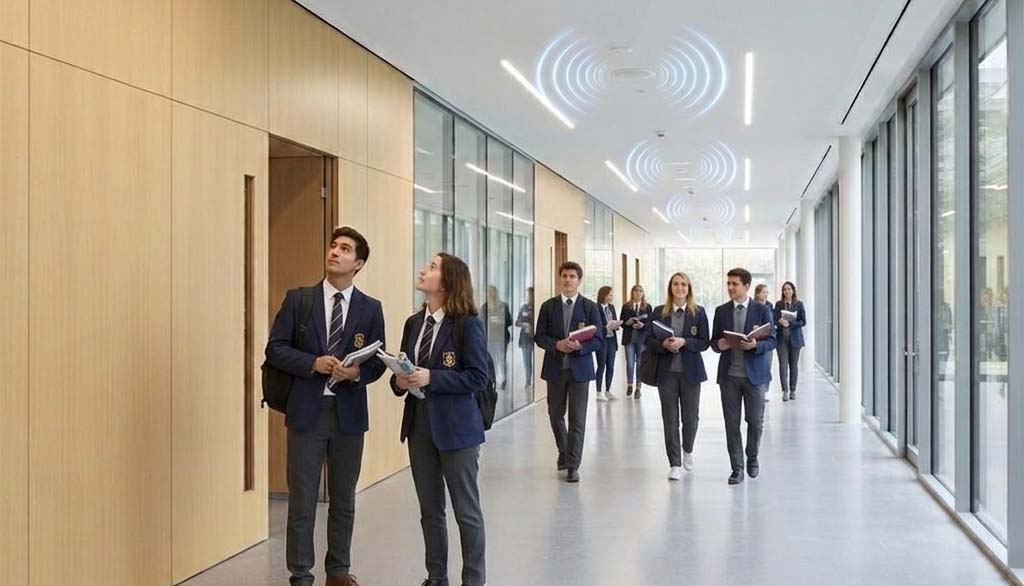
Since the start of the year, our monthly review has tracked lockdown and critical incidents across UK schools, hospitals, transport hubs and shopping centres, a reminder of just how wide-ranging these situations can be. August, by contrast, was quieter. With most schools closed for the summer break, the usual steady stream of incidents largely paused. But two incidents that did occur this month, at opposite ends of the spectrum in scale and setting, are worth a closer look precisely because of how different they were. A major London railway station and a primary school playground were each put to the test in their own way, and both turned on the same underlying question: how quickly and clearly can people in danger be told what to do, and where to go?
St Pancras evacuated after controlled explosion on suspicious vehicle
London’s St Pancras International was briefly evacuated after police carried out a controlled explosion on a suspicious unattended car parked outside the station. The incident was declared non-suspicious shortly afterwards, and the station reopened within 15 minutes, with Eurostar services unaffected.
London St Pancras station briefly evacuated amid controlled explosion
A dangerous dog forces a primary school into lockdown
Away from the capital, an Angus primary school was forced into lockdown after a loose dog gained access to the playground while around 150 children were outside at the start of the school day. Staff at Letham Primary School activated lockdown procedures and managed to contain the animal, with no children physically injured, though several parents reported that pupils were shaken by the experience.
Angus primary school forced into lockdown after ‘dangerous’ dog incident
August’s two incidents make the same point from opposite ends of the spectrum. At St Pancras, a brief evacuation put mass communication to the test at scale. With tens of thousands of passengers passing through daily, many unfamiliar with the building and its exits, the difference between an orderly evacuation and a dangerous crush often comes down to clear, audible instruction telling people exactly what’s happening and where to go, rather than leaving them to work it out from a crowd moving around them.
At Letham Primary School, the same principle played out on a much smaller scale, but with no less urgency. A lockdown trigger doesn’t need to be premeditated or malicious to be genuinely dangerous. A stray animal, an intruder, or a nearby threat, can turn a routine morning drop off into a fast moving situation in seconds. What matters in that moment is how quickly staff can alert everyone who needs to hear it, from the classrooms to the playgrounds, so that pupils and colleagues alike know exactly what’s happening and what to do next.
Two very different settings but the same underlying need: critical incidents rarely announce themselves in advance, and when they happen, the organisations and venues that cope best are the ones equipped to communicate quickly, clearly, and to everyone who needs to hear it, wherever they happen to be.